Use this concrete calculator to quickly estimate the amount of concrete required for construction projects such as slabs, driveways, patios, and foundations. By entering the length, width, and thickness of the area, the calculator determines the total concrete volume needed.
Accurate concrete estimation is extremely important in construction. Ordering too little concrete can delay a project, while ordering too much increases costs and material waste. A concrete calculator helps builders, contractors, and homeowners plan construction projects more efficiently.
Concrete is one of the most commonly used building materials in the world. It is used for residential buildings, commercial structures, bridges, sidewalks, and many other types of infrastructure. Because concrete is usually ordered in cubic meters or cubic yards, calculating the correct volume is essential.
This tool simplifies the process by performing the calculation instantly. Instead of manually multiplying dimensions or converting units, the calculator provides a quick and reliable estimate. You can also use our calculators page to find a lot more tools to make your everyday tasks easier.
What is a Concrete Calculator
A concrete calculator is a tool used to estimate the volume of concrete required for a specific construction area. Builders and contractors use it to determine how much concrete is needed before ordering materials.
Concrete volume is usually calculated for:
- floor slabs
- house foundations
- driveways
- sidewalks
- patios
- building footings
Without proper calculations, projects can experience material shortages or excessive costs. Using a calculator allows construction professionals to determine the required volume quickly and accurately.
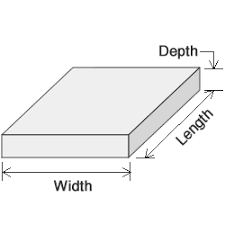
The calculator works by multiplying three basic measurements: length, width, and thickness. These dimensions determine the total volume of the area that must be filled with concrete.
Concrete Volume Formula
The basic formula used to calculate concrete volume is:
V = L \times W \times T
Where:
- V = volume of concrete
- L = length of the slab or area
- W = width of the slab or area
- T = thickness or depth
The result gives the total volume of concrete required for the project.
Example Calculation
Imagine you want to pour a concrete slab for a small patio.
Measurements:
Length = 5 meters
Width = 4 meters
Thickness = 0.10 meters (10 cm)
Calculation:
5 × 4 × 0.10 = 2 cubic meters
This means you will need approximately 2 cubic meters of concrete to complete the slab.
Builders often add an extra 5–10% to account for spillage and uneven surfaces.
Why Accurate Concrete Estimation Matters
Accurate material estimation is essential for construction projects. Concrete is typically delivered by truck and ordered in precise quantities. Incorrect calculations can create several problems.
Ordering too little concrete may cause project delays because additional concrete deliveries must be scheduled. Ordering too much concrete increases material costs and leads to waste.
Using a concrete calculator helps:
- reduce construction costs
- avoid material shortages
- improve project planning
- increase efficiency on job sites
Professional contractors rely on accurate measurements before starting construction work.
Common Applications of Concrete Calculations
Concrete volume calculations are used in many types of construction projects.
Residential construction uses concrete for house foundations, garage floors, patios, and driveways. Commercial construction projects require large volumes of concrete for building foundations, parking lots, and structural elements.
Infrastructure projects such as bridges, roads, and sidewalks also depend heavily on concrete calculations.
Because each project has different dimensions, using a calculator helps determine the correct material requirements quickly.
FAQ
How much concrete do I need for a slab?
Multiply the length, width, and thickness of the slab to calculate the total concrete volume.
What unit is used for concrete calculations?
Concrete is typically measured in cubic meters or cubic yards.
Should I order extra concrete?
Yes. Most contractors recommend ordering 5–10% extra to account for waste or uneven ground.